解码催产素微环路——
从触摸、恐惧,到大脑的社会性。
Decoding the oxytocin microcircuit —
from touch and fear to the social brain.
十余年在体电生理、光纤记录与光/化学遗传学,围绕一条核心问题:神经肽如何在真实行为中被释放、被读出、被调控。三项工作分别回答了「怎么测」「正向社交」「负面情绪」。 Over a decade of in vivo electrophysiology, fiber photometry, and opto/chemo-genetics, around one question: how neuropeptides are released, read out, and modulated during real behavior. Three lines of work answer how to measure it, prosocial touch, and fear relief.
催产素核心微环路The oxytocin core microcircuit
一个环路,三条互补的证据链——从发明测量工具,到揭示它如何促进社交、缓解恐惧。每条链都落在顶刊上。 One circuit, three complementary lines of evidence — from inventing the measurement tool, to showing how it drives social interest and relieves fear. Each anchored in a top-tier paper.
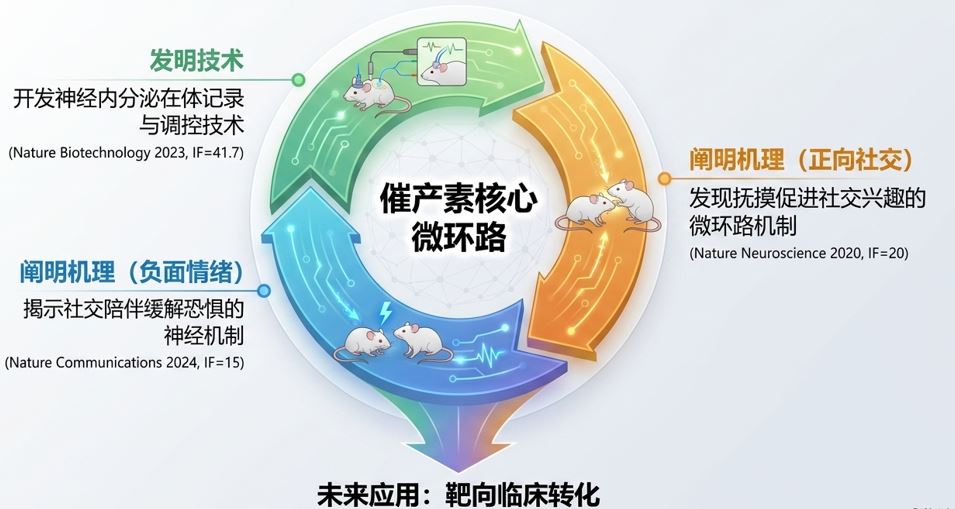
在体记录与调控In Vivo Recording and Modulation
开发神经内分泌在体记录与调控技术,让神经肽释放第一次被实时“看见”。Developed in vivo neuroendocrine recording and modulation methods, enabling real-time visualization of neuropeptide release.
社交触摸的微环路Social-touch microcircuit
发现抚摸经小细胞催产素神经元促进雌鼠间社交兴趣的机制。Social touch drives interfemale communication via parvocellular oxytocin neurons.
社交缓冲消退恐惧Social buffering of fear
揭示社交陪伴经催产素在中央杏仁核引发持续可塑性、缓解恐惧。Social buffering extinguishes fear via sustained oxytocin-driven plasticity in central amygdala.
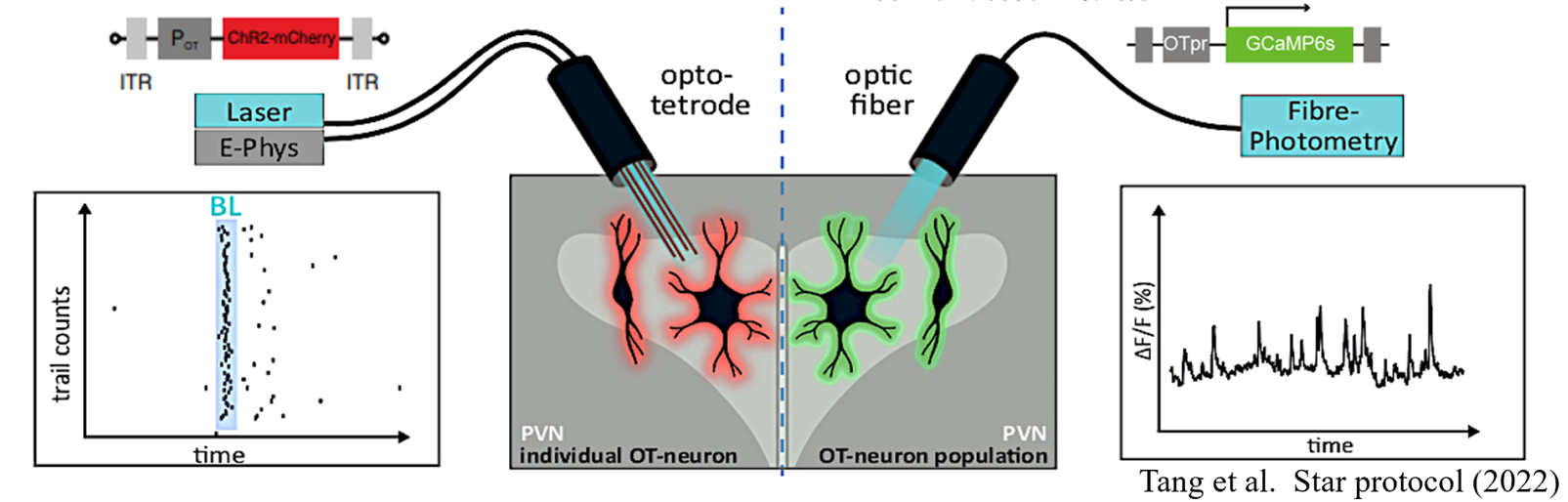
在体记录与调控In Vivo Recording and Modulation
结合光遗传标记电生理与光纤光度记录,实时读取催产素神经元的单细胞与群体活动。 Opto-tagged electrophysiology and fiber photometry provide real-time readouts of single-cell and population activity in oxytocin neurons.
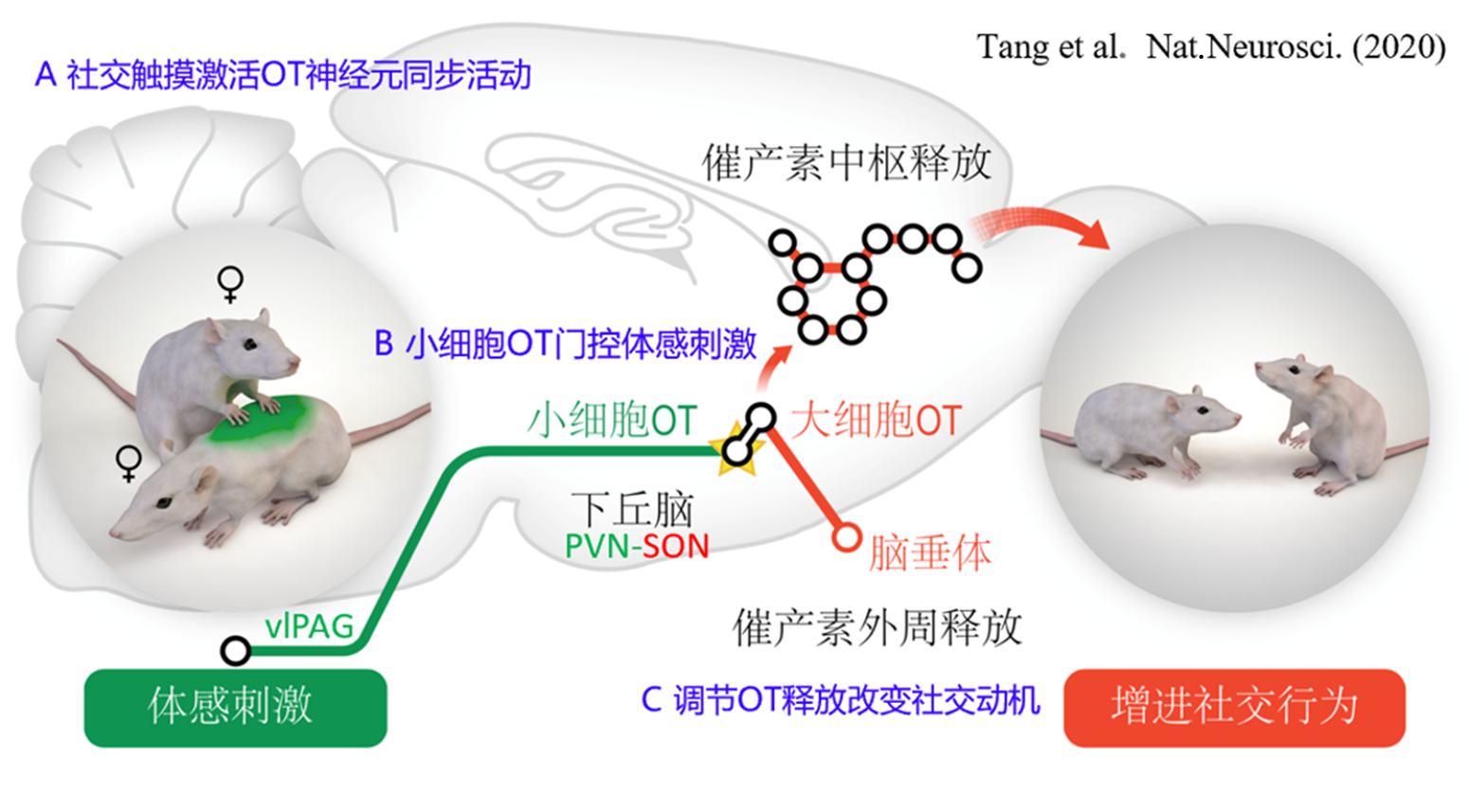
抚摸如何"打开"社交How touch switches sociality on
社交触摸落在背部敏感区,信号经中脑导水管周围灰质腹外侧区(vlPAG)传入下丘脑。小细胞催产素神经元充当"门控阀",一旦刺激越过阈值,便驱动大细胞催产素神经元群体同步放电——催产素同时在中枢释放并经垂体外周释放,从而增进社交行为。 Social touch on the dorsal sensitive zone travels via the ventrolateral periaqueductal grey (vlPAG) into the hypothalamus. Parvocellular oxytocin neurons act as a gate: once the stimulus crosses threshold, they drive the magnocellular oxytocin ensemble to fire in synchrony — oxytocin is released both centrally and peripherally via the pituitary, boosting prosocial behavior.
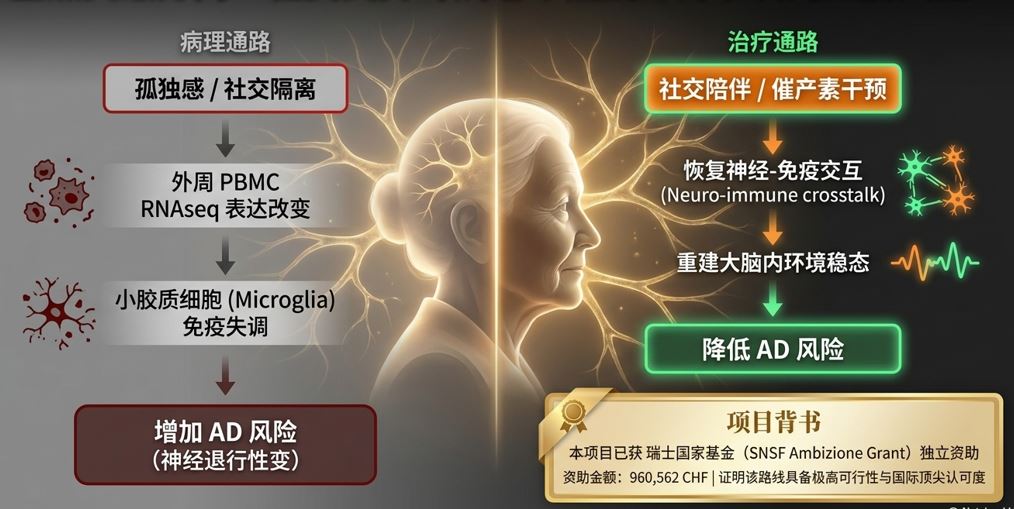
从孤独到阿尔茨海默病风险From loneliness to Alzheimer's risk
社交隔离经外周免疫与小胶质细胞失调,增加 AD 风险;而社交陪伴/催产素干预可恢复神经-免疫交互、降低风险。这条通路正由瑞士国家科学基金独立资助。 Social isolation raises AD risk through peripheral immunity and microglial dysregulation; social support / oxytocin restores neuro-immune crosstalk and lowers it. This line is funded by an independent SNSF grant.
代表论著Selected publications
Tang Y (first), Benusiglio D, Lefevre A, et al.
Hegoburu C, Tang Y (co-first), et al.
Tang Y (first co-author), Wahis J, Melchior M, et al. · Cambridge University Press
完整列表见 Full list on ORCID ↗
陪伴如何"关掉"恐惧How companionship switches fear off
孤立无援时,中央杏仁核的恐惧记忆神经元高度激活;一旦有社交陪伴,下丘脑 PVN 释放催产素,抑制这一激活——恐惧被"社会性缓冲"下来。 When isolated, fear-memory neurons in the central amygdala fire strongly. With a companion present, hypothalamic PVN releases oxytocin that suppresses this activity — fear is socially buffered.